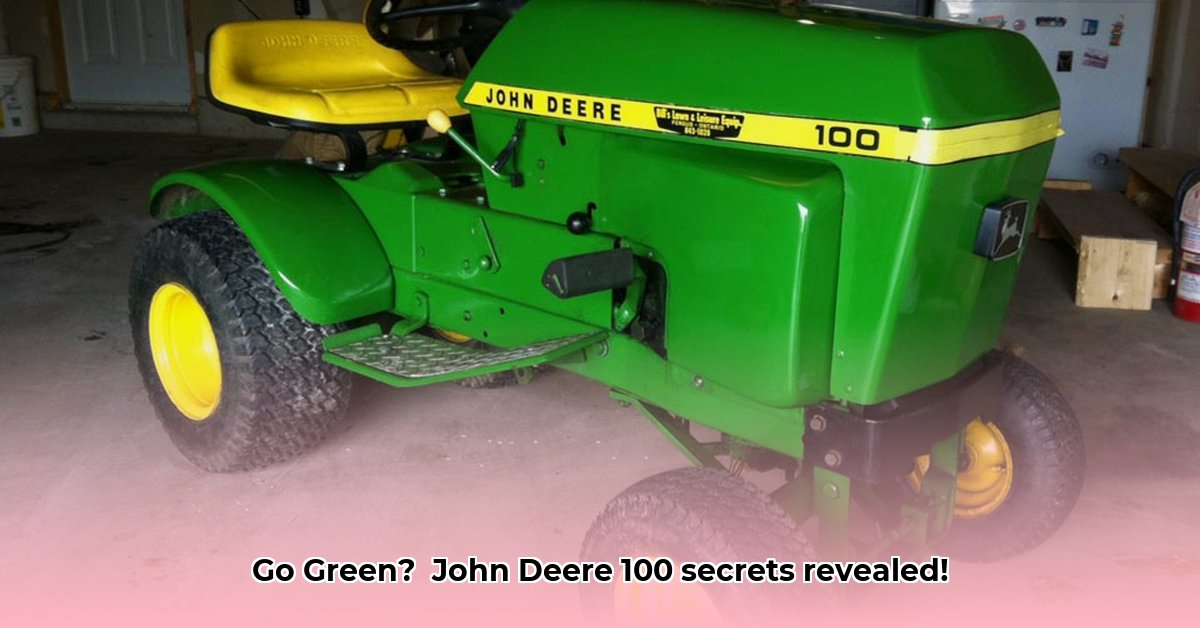
The John Deere 100 Series lawn tractor promises efficient mowing, but does it deliver on its implied sustainability claims? This detailed review examines its performance, durability, and environmental impact, providing actionable insights for eco-conscious consumers. For more information on proper engine oil, check out this helpful resource: engine oil guide.
Power and Performance: Speed vs. Sustainability
The John Deere 100 boasts increased horsepower compared to previous models, suggesting faster mowing and potentially lower fuel consumption per unit area. However, independent verification of these fuel efficiency claims is currently lacking. While a faster mowing time is appealing, the actual fuel savings remain unproven. Further testing is needed to quantify the real-world impact on fuel efficiency. Does the increased speed truly translate into significant long-term fuel savings? This is a critical question demanding further investigation.
Built to Last: Durability and its Environmental Impact
A key selling point of the John Deere 100 is its durability. The manufacturer highlights its robust construction and extended warranty, implying a longer lifespan. A longer lifespan reduces the need for frequent replacements, minimizing both waste and the environmental cost of manufacturing new tractors. The relatively easy oil-change system further contributes to ease of maintenance and potentially extends the tractor's operational life. However, long-term testing is needed to fully assess the machine's overall lifespan and confirm the manufacturer's claims about its extended usability.
Comfort Counts: Ergonomics and Efficiency
The John Deere 100 prioritizes operator comfort. Reduced operator fatigue can lead to increased efficiency, potentially decreasing overall mowing time and fuel consumption. Efficient operation, even through improved operator comfort, contributes indirectly to a smaller environmental footprint, highlighting the often-overlooked link between ergonomics and sustainable landscaping.
The Eco-Friendly Angle: A Critical Examination
The John Deere 100's sustainability claims require closer scrutiny. While aspects like longevity and potential fuel efficiency are positive, crucial data remains absent. A thorough lifecycle assessment (LCA) – encompassing manufacturing, transportation, use, and disposal – is necessary to fully understand its overall environmental impact. Furthermore, the recyclability of components remains unclear. What is the carbon footprint associated with its production? What are the options for responsible disposal at the end of its life? These unanswered questions significantly impact the evaluation of its true sustainability. Without this data, we lack a complete picture.
Navigating the Risks: A Balanced Perspective
As with any product, understanding the potential risks is crucial. This is as important as reviewing the benefits.
| Feature | Risk Category | Likelihood | Impact | Mitigation |
|---|---|---|---|---|
| Higher Horsepower Engines | Increased Fuel Consumption | Medium | Medium | Engine design improvements; Efficient mowing practices. |
| Extended Warranty | Lower Repair Costs | High | Low | Efficient warranty processing; Preventative maintenance. |
| Steel Mower Decks | Disposal Challenges | Medium | Low-Medium | Collaboration with recycling programs; Improved design for recyclability. |
| Limited LCA Data | Reputational Risk | High | High | Comprehensive, independently verified LCAs are essential. |
How to Reduce the Environmental Impact of Your John Deere 100 Series Lawn Tractor
Several simple steps can reduce the environmental footprint of your John Deere 100. Even small adjustments can lead to impressive gains in sustainability.
Maximize Fuel Efficiency: Regular maintenance (oil changes, air filter replacements), optimal mowing techniques (avoiding over-revving, maintaining recommended speeds), and sharp blades are crucial for minimizing fuel consumption. A well-maintained engine is more efficient, like a well-tuned car.
Embrace Sustainable Landscaping: Reduce fertilizer and pesticide use through integrated pest management (IPM) and other smart practices. Water deeply but infrequently, optimizing water usage. Consider collecting rainwater for irrigation.
Extend Tractor Lifespan: Regular cleaning, proper storage, and prompt attention to minor issues help prevent premature wear, extending the operational life of the tractor significantly reducing the need for replacements.
Responsible Disposal: Recycle components whenever possible, and dispose of fluids such as oil properly at designated collection points to protect the environment. This significantly reduces the need for replacement parts.
Holistic Approach: Combine responsible tractor ownership with broader sustainable landscaping choices—planting native flora and reducing chemical use—for a complete, eco-friendly approach.
The Verdict: A Promising Start, but Further Investigation Needed
The John Deere 100 offers some advantages that contribute indirectly to sustainable landscaping. Increased efficiency and a longer lifespan are positive, yet the absence of critical data regarding the environmental footprint of its manufacture and disposal remains a significant concern. Until more comprehensive data is made available – particularly an independently verified LCA – a definitive judgment on its green credentials is impossible. However, it represents a positive step, and further investigation from both the manufacturer and independent researchers is vital. The current limited information is insufficient for a complete evaluation.